Oil Prices Surge Again – What It Means For Gold, Silver, And Crypto
Brent crude recently surged past the $100 threshold before a fleeting de-escalation pulled prices back toward $94. However, the respite proved temporary. Crude is once again on an upward trajectory, with Brent trading at $97.71 and WTI closely trailing at $97.40.
This renewed momentum suggests that market participants remain deeply skeptical regarding the resolution of supply-side risks.
With the Strait of Hormuz facilitating approximately 20% of the world’s global oil and gas flows, any perceived threat to this maritime artery immediately tightens the global energy balance.
This volatility is now actively recalibrating inflation expectations, interest rate outlooks, and valuations across the broader asset spectrum.
Why Oil Is Up Today?
The latest market data reveals that both Brent and WTI climbed by roughly 3% as traders priced in a potential collapse of the Middle East truce.
The primary concern remains the Strait of Hormuz, where the threat of restricted tanker traffic continues to loom over global supply chains.
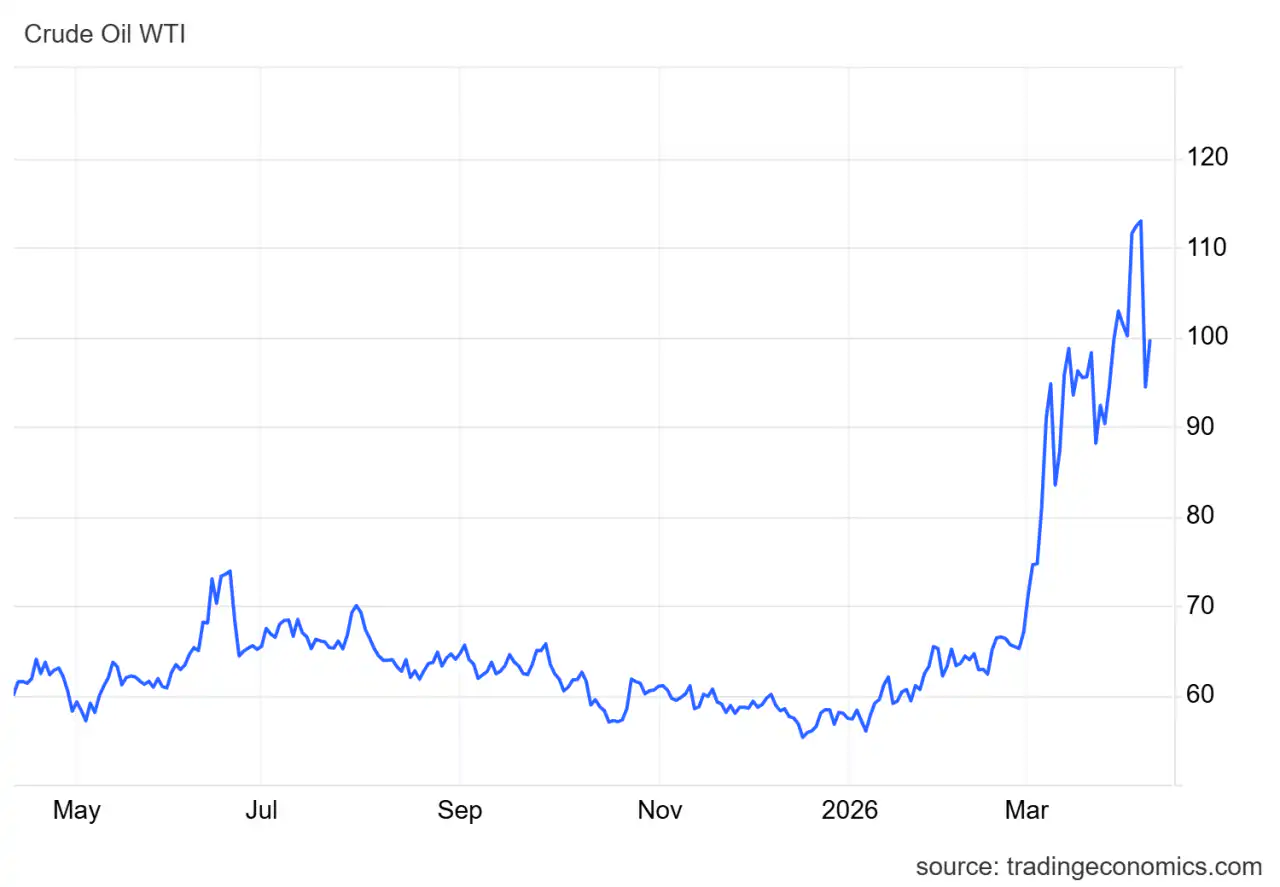
The significance of this corridor cannot be overstated; it handles a fifth of global liquid energy flows. Even a momentary disruption ripples through the economy by inflating freight and insurance premiums.
Vandana Hari, founder of Vanda Insights, notes that markets may be “pricing hope, not reality,” suggesting that flows will likely remain “constrained, opaque, and politically mediated” for the foreseeable future.
“The futures market looks a bit broken,” she added, highlighting the disconnect between diplomatic headlines and physical supply realities.
What Cross Impact Oil Will Have On Other Markets
Gold currently finds itself in a complex, almost paradoxical position. Spot gold is trading near $4,728.18, up 0.3%, finding some support from a periodically fluctuating dollar.
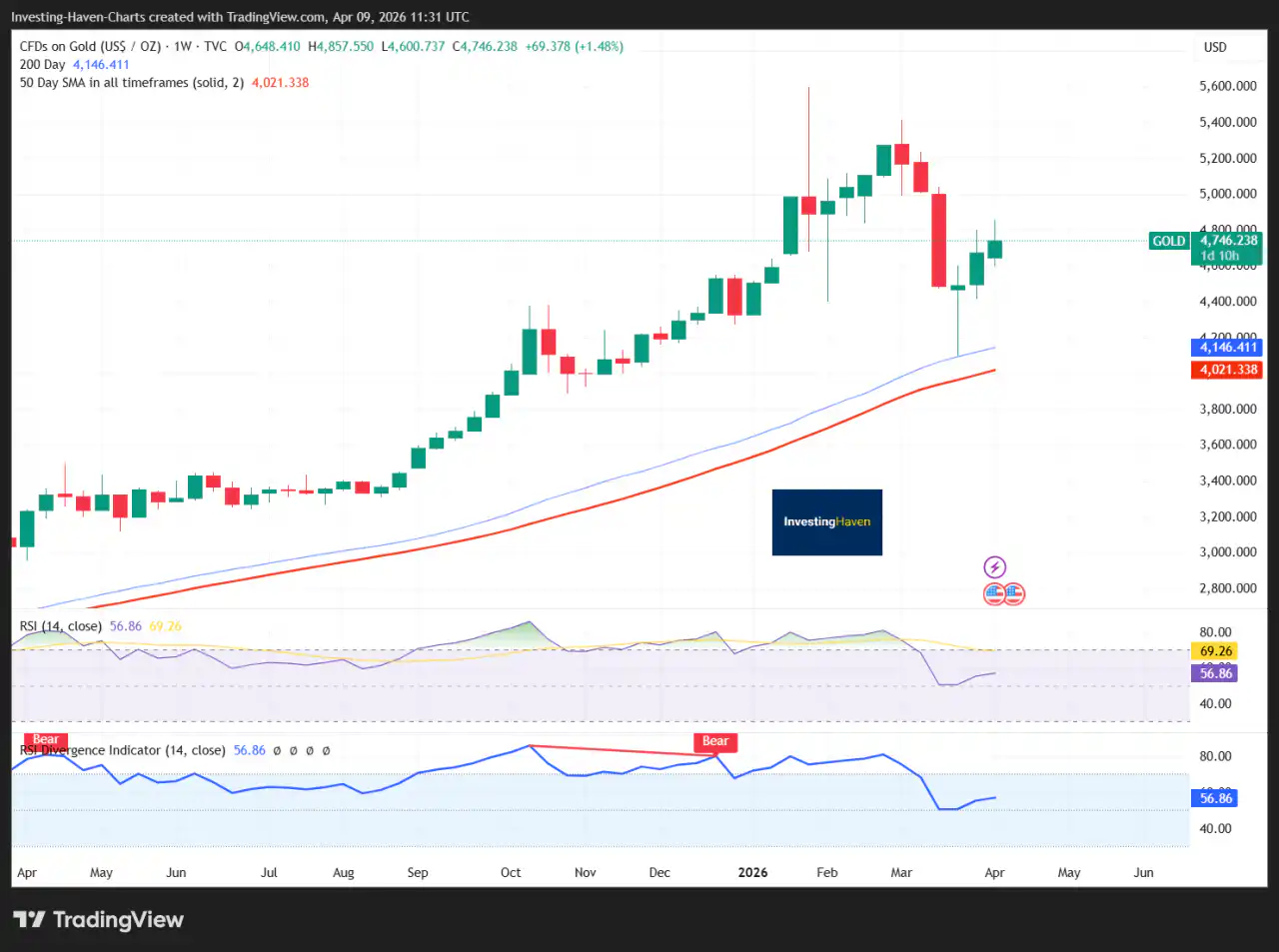
However, the same energy shock that drives safe-haven buying also serves as a catalyst for inflation – effectively undermining the argument for imminent Fed rate cuts.
Ross Norman of Metals Daily describes the current environment as “a little bit un-tradeable,” noting that the weaker dollar provides a temporary lift, but the broader macro picture remains muddy.
This creates a fragmented market where a single headline can propel oil, the dollar, and bullion in conflicting directions simultaneously.
Silver presents an even more nuanced case. Unlike gold, silver possesses a significant industrial component.
If sustained oil prices trigger stagflation – high inflation coupled with slowing economic growth – silver may face a “tug-of-war” between its haven status and waning industrial demand.
Consequently, it remains a notably more volatile play than gold in this specific macro setup.
The crypto sector appears even more exposed to these shifts. Bitcoin recently traded at $71,310, showing slight intraday weakness. Because higher oil prices exert upward pressure on the consumer price index (CPI), they dampen the likelihood of a pivot by the Federal Reserve.
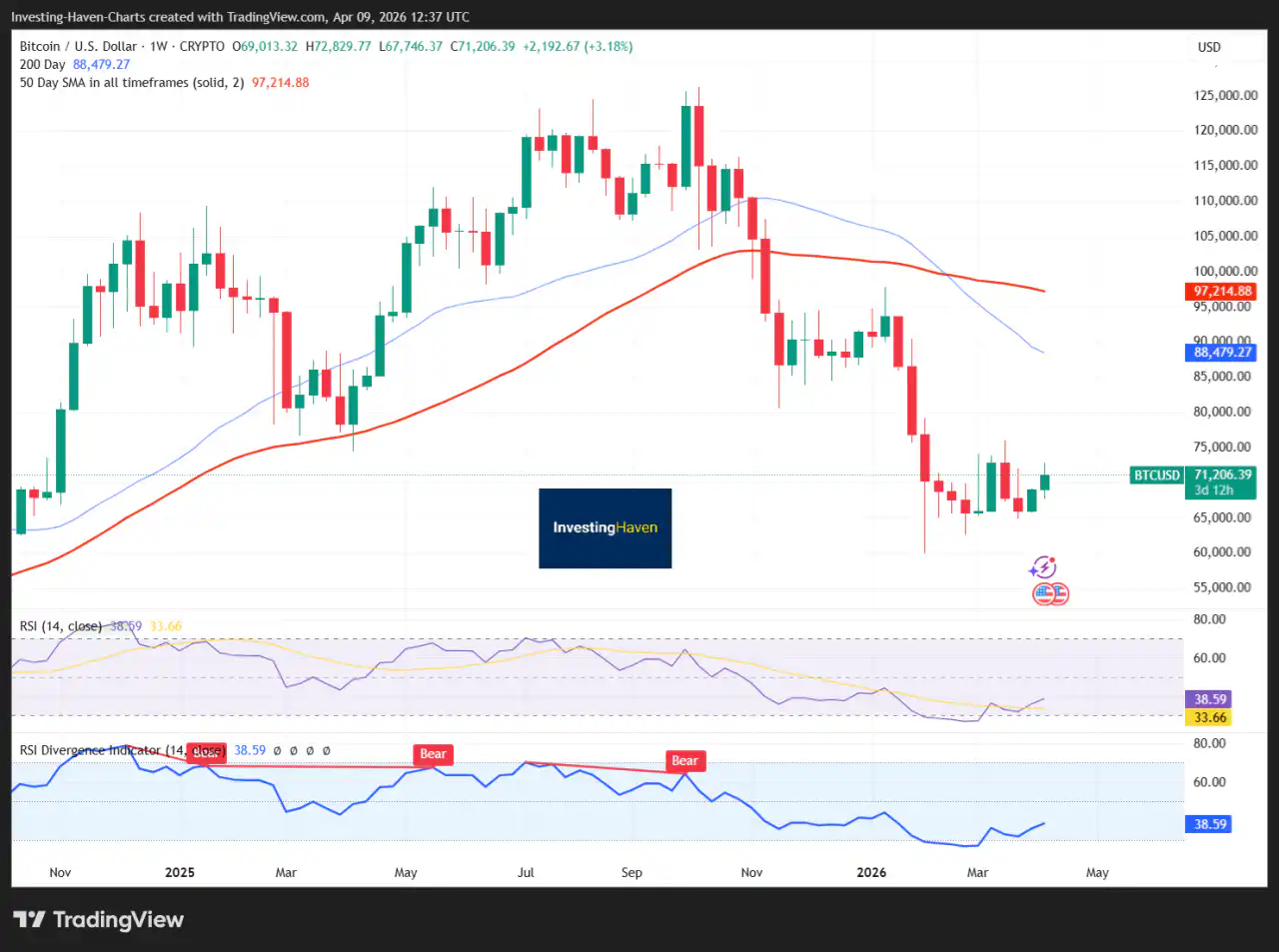
This environment is historically hostile toward speculative, high-beta assets. Indeed, CME FedWatch data now shows the probability of an April rate cut has effectively evaporated, with a staggering 98.4% chance of a rate hold.
RECOMMENDED: 23 Cryptocurrency Forecasts For April 2026
The Bigger Picture Behind The Oil Move Today
The underlying signal of this oil rally is the persistence of inflation. Recent Federal Reserve minutes have indicated a hawkish shift, with some policymakers even entertaining the possibility of further rate hikes if price stability remains elusive.
This is a stark departure from the previously anticipated “clean” rate-cut cycle.
Furthermore, the relationship between gold and oil is evolving. Despite being a haven, gold has retreated more than 11% since the onset of the conflict.
This suggests that the market is prioritizing the impact of oil on “real rates” – the interest rate adjusted for inflation – rather than just buying into geopolitical fear.
Major financial institutions are also hedging their bets. Goldman Sachs recently adjusted its second-quarter forecasts to $90 for Brent and $87 for WTI, assuming a gradual normalization.
However, the bank issued a stark warning: in a “severe case” where the ceasefire fails and production losses persist, Brent could easily average closer to $115 by the fourth quarter.
What Comes Next?
The critical indicators to watch moving forward extend beyond the price of crude itself. Market stability hinges on whether shipping through the Strait of Hormuz returns to pre-conflict levels and whether upcoming PCE (Personal Consumption Expenditures) data continues to run hot.
If energy costs remain elevated, gold may find a high floor but lack the momentum for a breakout. Meanwhile, silver is likely to remain choppy, and crypto will continue to struggle under the weight of a restrictive monetary policy.
Conversely, should supply risks dissipate, we could see a rapid reversal of these “war trades.” Ultimately, this oil move serves as a litmus test for the entire global macro economy.
YOU MIGHT LIKE: One Stock That Could 10x From Oil Price Boom
Conclusion
The rebound in oil prices is doing far more than providing a tailwind for energy equities; it is dragging inflation back to the center of the global narrative. This shift has fundamentally altered the investment thesis for gold, silver, and crypto.
The central question remains: is this a fleeting supply shock or the beginning of a sustained structural shift? The answer will likely be found in the coming weeks within the shipping lanes of Hormuz and the Federal Reserve’s reaction to the next batch of inflation data.